

Part of: Turning jobsite photos into marketing
How to make before-and-after posts without hiring a photographer
One habit on day one, one set at the end, and a phone. That is the whole method.
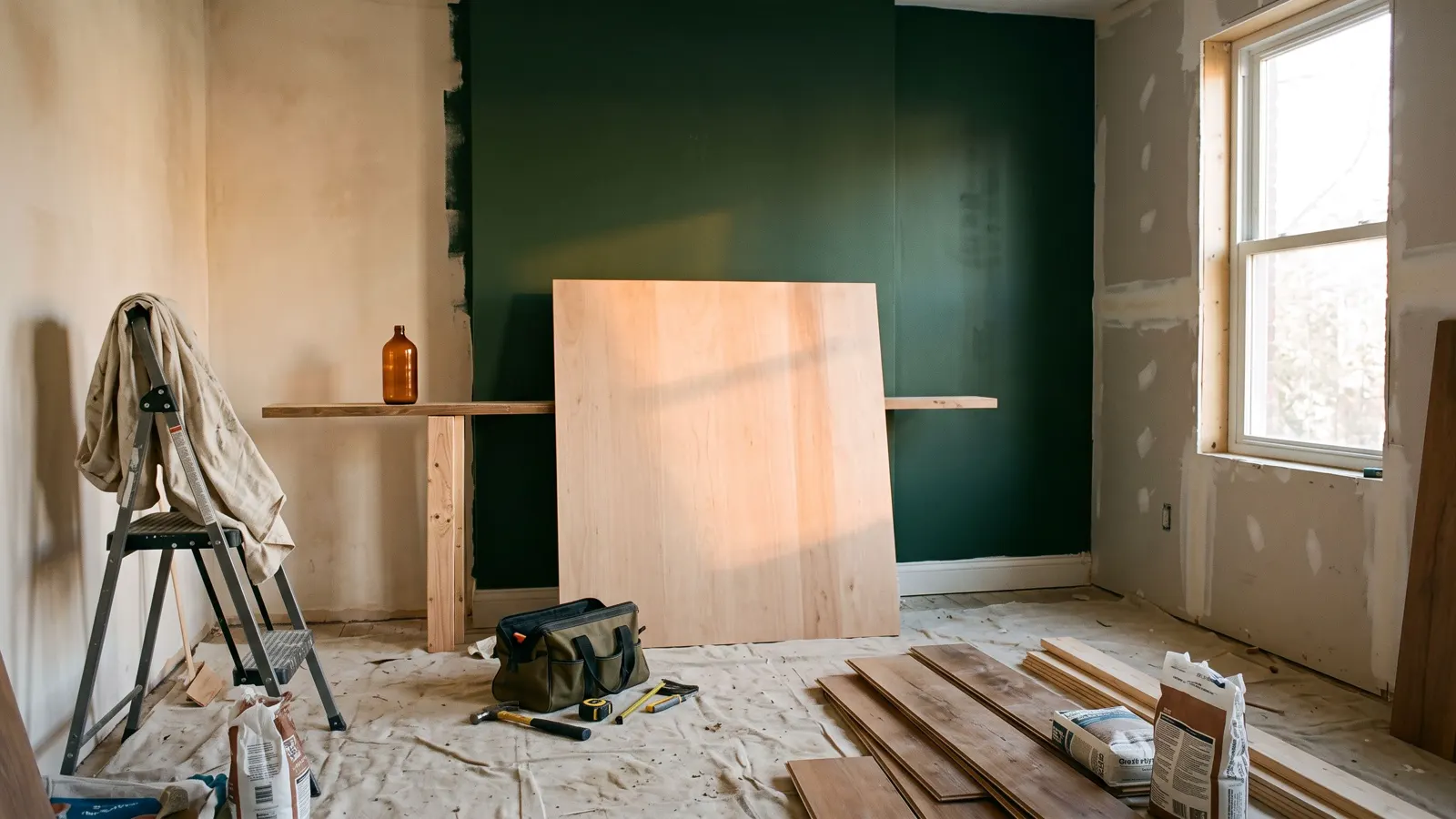
The before-and-after is the best format a remodeler has, and most of the time it cannot be made, because the “before” does not exist. By the time anyone thinks about marketing the job, the room has been gutted for six weeks.
The fix is one habit, on one day, and it takes ninety seconds.
The day-one shot
Before demolition starts, your lead stands in the doorway of the room and takes one wide photo. Then two steps in, and one more. That is it.
The doorway matters more than the quality. What makes the pair work is that both photos are from the same position, so a viewer can line them up without thinking about it. Two beautiful photographs from different corners of the room do not read as the same space, and the effect disappears.
The finished set
At the end, stand in the same doorway. Same position, same framing.
Then take the rest: the details, the tile, the fixture that took nine weeks to arrive. Those are the ones that fill out the arc. But the pair is the one that does the work.
Four things that go wrong
Lights. Turn every light in the room on, open the blinds, and do not use the flash. A phone camera handles mixed light far better than it handles a flash bouncing off a new countertop.
Clutter. Move the ladder, the coffee cup and the vacuum out of the frame. Ten seconds. It is the difference between a finished room and a job site with a nice counter in it.
Crooked verticals. Hold the phone level and square to the wall. A kitchen shot from an angle looks like a listing photo from 2004.
People’s homes. Ask. Some clients do not want their house on the internet, and finding that out after you have posted it is a bad conversation to have with somebody who is about to refer you.
Old paint. If the house was built before 1978, how the work was done is governed by the EPA’s Renovation, Repair and Painting program, and the certification you hold for it is worth saying out loud in the caption.
What to do with them
Post them in order, while the job is running, not all at once at the end. The progress is what makes the reveal land – that is the whole idea behind the project story arc – and it is also what shows a prospective customer that you are working right now.
If that sounds like one more thing to keep up with in the middle of a busy season: it is, and that is what PostIQ does with them. Your crew takes the photos into JobTread as usual, exactly as described in turning those uploads into marketing, and the posts go out on a schedule without you opening anything.
References
- 1. Renovation, Repair and Painting Program — U.S. Environmental Protection Agency
- 2. JobTread — JobTread
Written for
Read next